
Exercise Guidelines for Aging Adults
Categories
- All Posts
- Wellness in Business
- Nutrition Bites
- Exercise Moves
- Fitness Files
- Prevention Plus
- Vitamin Aisle
- Recipes - Entrees
- Recipes - Side Dishes
- Recipes - Snacks
- Recipes - Desserts
- Recipes - Breakfast
- Recipes - Appetizers
- Recipes - Salad
- Recipes - Soups
- Cooper Stories
- Self-care
- Dr. Cooper's 8 Healthy Steps
- Skin Care
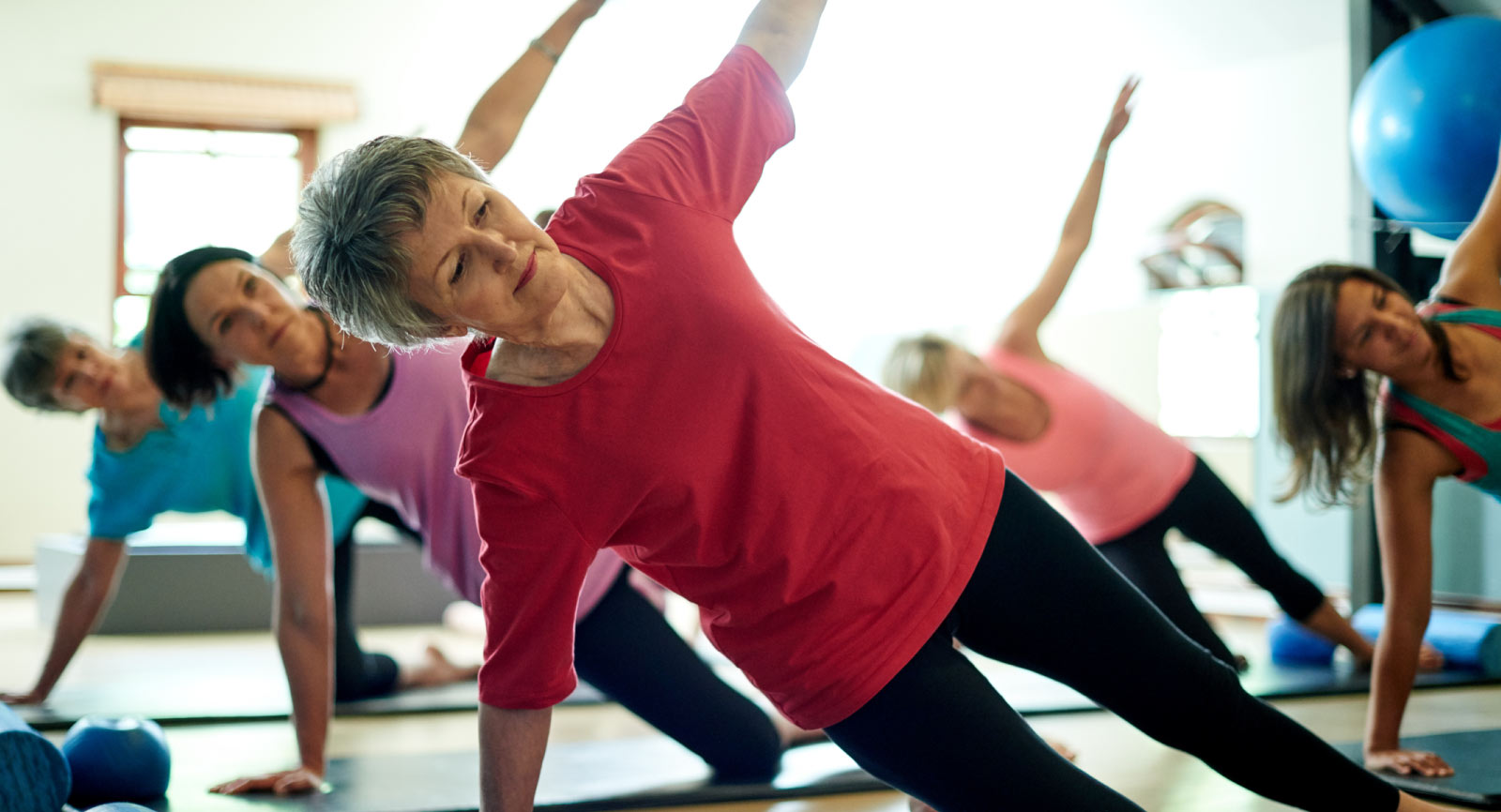
As our bodies age, we begin to lose strength and mobility, which can cause us to become more dependent on others for our daily activities. Debi Wilkins, MS, Professional Fitness Trainer at Cooper Fitness Center, shares how starting an exercise routine focused on increasing strength, endurance, balance and mobility can be key to maintaining independence and making daily movements easier.
Where to Begin
At any age, you need to speak with your primary care physician to make sure you are healthy enough to begin an exercise program. If you have no prior experience exercising or you haven’t exercised in years, it’s essential to start small. Wilkins says, “work on consistency and focus on safety.” One safety tip she recommends is having footwear that is properly fitted, supportive and the athletic type. Your footwear should be comfortable, with adequate traction, and stability.
In addition to having the proper footwear, it’s important to do exercises you feel comfortable and confident in doing. Try not to overexert your body as this can lead to improper form and/or injury. Wilkins shares tips to help you avoid injury while beginning an exercise routine.
- Always warm up before a workout and cool down afterwards. Learn more: The Facts About Warming Up and Cooling Down.
- Start slowly and progress gradually
- If lifting weights, only lift weights you are comfortable with and listen to your body. Read Strength Training 101 to learn how to properly start weight training.
- Work out with a friend or a trainer who can watch your form. Read Partner Training: Why Having a Workout Buddy is Worth It to learn more.
Once you begin exercising and doing aerobic activities, Wilkins recommends the talk test during your workouts. “The talk test is a simple way to evaluate how hard you are working during aerobic activity,” says Wilkins. The ability to carry on a conversation is related to the intensity with which you are working. You should be able to carry on with a conversation while exercising. In addition, wearing a heart rate monitor can also help you keep an eye on your heart rate to see if it is increasing too fast or high.
What to Work On
Strength Training
It’s recommended for older adults to focus major muscle groups, especially on the legs, hips, core and upper body. But why are these muscle groups helpful as you age?
- Strengthening your legs and hips is important for walking, getting up from a chair and maintaining balance.
- Strengthening your core supports posture, stability and balance.
- Strengthening your upper body helps with everyday activity such as carrying items, lifting grandkids, doing chores and daily personal care.
For older adults beginning a strength training program, functional strength should be the main goal to help you stay active and independent. Learn more about functional movements with Fitness Files article, Functional Training Can Improve Daily Movements.
Watch our Exercise Moves Video on Exercises for Shoulder Mobility, Pain and Recovery to learn how a variety of ranges of motion protects your shoulders and help enhance overall movement in daily activities.
Balance
“Balance naturally declines as we get older, but we can do things to improve it,” says Wilkins. Balance issues can come from loss of muscle in the legs, core and hips, poor vision or certain medications. Strength training is also a great way to help with stability while walking, getting up and down from a chair and standing. Wilkins shares exercises to help improve your balance such as:
- Standing on one leg (holding on a support if needed)
- Heel to toe walking
- Step-ups
“Balance issues are a big reason older people fall. By improving your balance as you age, you also help prevent future injuries,” says Wilkins.
Read Better Balance At Any Age to learn how balance is the foundation of moving well.
Decreasing Stress
Exercise helps more than just your physical body, it has been shown to help decrease levels of stress. Exercise can help by increasing energy, strength and improving sleep by releasing endorphins to the brain that act as a mood elevator—lowering levels of stress hormones called cortisol.
Older adults can have high levels of stress due to:
- Declining health
- Loss of loved ones
- Possible financial burdens
- Poor living situations
- Loneliness
In addition to improving mood, exercise is also a great way to increase confidence in group situations and offer opportunities for social interaction.
Wilkins recommends anyone beginning an exercise program see a professional fitness trainer to learn proper form and technique. For more information about professional fitness training at Cooper Fitness Center or to schedule a session with a trainer, visit cooperfitnesscenter.com or call 972.233.4832.