
Addressing Muscle Imbalances to Avoid Pain
Categories
- All Posts
- Wellness in Business
- Nutrition Bites
- Exercise Moves
- Fitness Files
- Prevention Plus
- Vitamin Aisle
- Recipes - Entrees
- Recipes - Side Dishes
- Recipes - Snacks
- Recipes - Desserts
- Recipes - Breakfast
- Recipes - Appetizers
- Recipes - Salad
- Recipes - Soups
- Cooper Stories
- Self-care
- Dr. Cooper's 8 Healthy Steps
- Skin Care
Imbalance, discomfort or a recent injury can be a reason to begin Muscle Activation Techniques® (MAT). But what is MAT and how can it help your body recover and move more efficiently? “MAT is a way of assessing asymmetry on the right and left side of the body as well as finding a way to alleviate discomfort from moving while doing everyday activities,” says Ryan Sheppard, MSEd, Professional Fitness Trainer at Cooper Fitness Center.
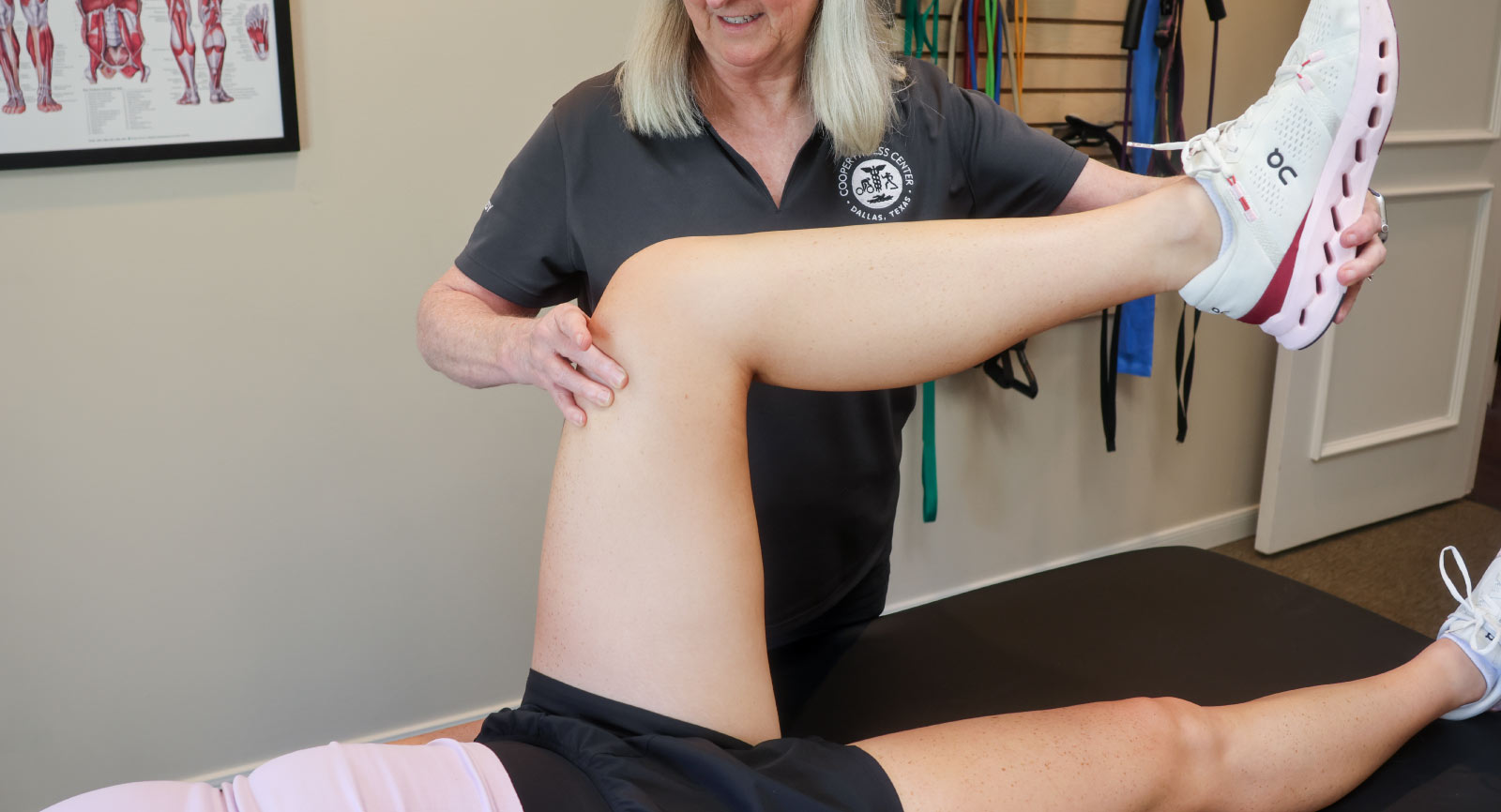
MAT is a hands-on process focused on identifying the root of pain and discomfort in the body rather than simply a tool to help relieve pain. With the help of understanding the importance of each muscle movement and how the muscle connects to the brain and nervous system, a MAT professional can help you reinforce the stabilization of your muscles.
Who Can Benefit from MAT
MAT is recommended for anyone, when you don’t use a muscle for an extended period or experience too much trauma, your muscles can start to shut down, which is the body’s way of protecting the muscles from being overstressed or overused. When this happens for prolonged periods of time, stretching and flexibility exercises aren’t enough to get the muscles moving like they used to. “When recovering from an injury, many people believe it’s best to not move in fear of causing further injury, but with MAT, you can regain regular movement more easily and become stronger at the same time,” says Sheppard. If you recently had an injury, it is recommended to be cleared to exercise by your doctor before doing MAT. If you have an injury that is causing inflammation and swelling, this could impede your range of motion, so it is recommended to wait two to three weeks before starting MAT.
For those who suffer from chronic pain, MAT can also alleviate discomfort by helping the body work more efficiently. Since the muscular system runs head to toe, a huge percentage of a body’s weight comes from muscles. “If the muscle system is operating more efficiently, you can decrease inflammation and stress on joints, which can lead to a decrease of chronic pain,” Sheppard explains.
Even if you are not feeling any obvious discomfort, you can still benefit from MAT. “Asymmetries in the body and muscular imbalances can be caused by our everyday movements due to the excessive use of using only one side of the body,” says Sheppard. For example, imbalances can be caused by:
- Overusing your dominant hand or foot
- Playing a sport such as tennis or golf that predominately uses one side of your body
- A past injury causing you to avoid the use of one side of your body to escape pain or discomfort
What to Expect During A MAT Session
During your first MAT session, which usually takes 20-60 minutes, the MAT professional assesses your:
- Upper body
- Lower body
- Core
- Trunk
- Spine
This assessment evaluates your range of motion and if you have any pain or discomfort while moving. You perform movements using one side of your body and then repeat them using the other side to see the difference in strength on each side. Some examples of movements can include:
- Hip external rotations
- Shoulder external rotations
- Glute extension
Watch Paige Cervantes, Certified Muscle Activation Technique® Specialist, as she shares some examples of movements you may perform during your MAT session in this Exercise Moves video, Improve Movement with Muscle Activation Techniques®.
Depending on the recommendation from the MAT professional, you can have up to two MAT sessions per week. After experiencing improvement in your sessions, you can start to go one or twice monthly.
While nobody can become completely symmetrical, MAT sessions can help close the gap.
The assessment also tests the movement from the shortest part of the muscle called concentric movement, which is usually the hardest position for people to show strength. Measuring your strength with concentric movements can determine if you need to improve functional strength. In addition to improving movement, these muscle tests can help with activating neuroplasticity, a way of activating the brain’s ability to recognize new or improve functionality of a muscle.
To help improve your body’s symmetry and balance, Sheppard recommends trying unilateral strength training. This training ensures you are doing the same number of reps with the same weight on each side, such as lunges, leg deadlifts and arm rows. “Unilateral strength training is an ideal way to help decrease the asymmetric movements we typically perform in our everyday life, such as reaching, carrying, throwing and even walking,” says Sheppard.
Not all fitness professionals are qualified to practice MAT; only MAT-certified trainers can provide this service.
Book your Cooper Fitness Center MAT session today by contacting Mary Edwards, MS, Fitness Director of Cooper Fitness Center: medwards@cooperfitnesscenter.com | 972.367.6939