
Health Benefits of Vitamin D

Categories
- All Posts
- Wellness in Business
- Nutrition Bites
- Exercise Moves
- Fitness Files
- Prevention Plus
- Vitamin Aisle
- Recipes - Entrees
- Recipes - Side Dishes
- Recipes - Snacks
- Recipes - Desserts
- Recipes - Breakfast
- Recipes - Appetizers
- Recipes - Salad
- Recipes - Soups
- Cooper Stories
- Self-care
- Dr. Cooper's 8 Healthy Steps
- Skin Care
Getting enough of the “sunshine vitamin” has many perks†. Most of us know that vitamin D is essential for building and strengthening our bones†, but the health benefits of vitamin D don’t stop there†.
Vitamin D is a fat-soluble vitamin that your body stores in the liver and fat tissue until it’s needed. Found in some foods and produced by the body when the skin is exposed to sunlight, vitamin D is a key player in absorbing and retaining essential nutrients† – calcium†, magnesium† and phosphate†. Without sufficient vitamin D, the body can only absorb 10 to 15 percent of the dietary calcium consumed through food. The most important compounds are vitamins D2 and D3.
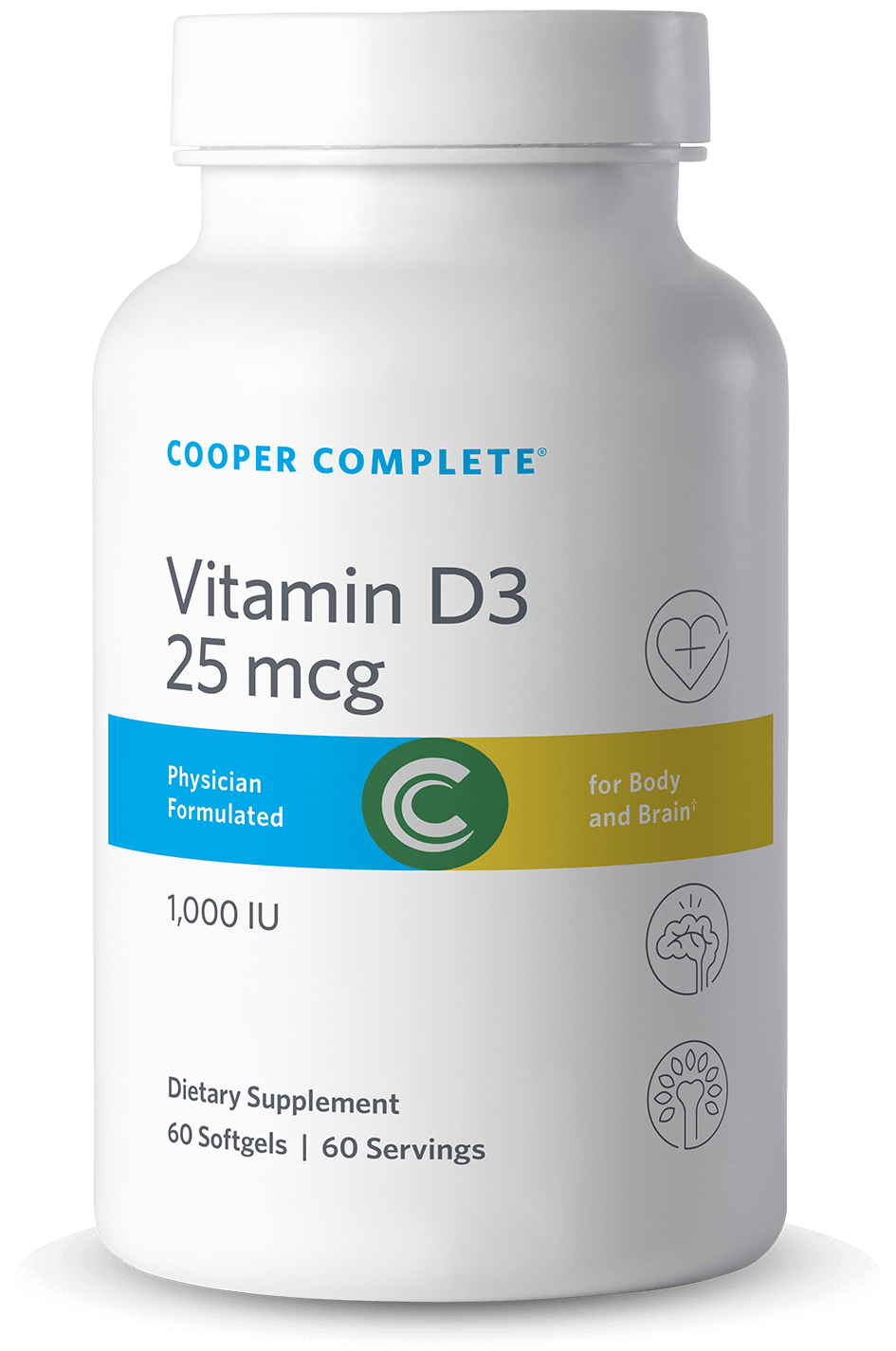
Vitamin D3 25 mcg (1000 IU) Supplement
Vitamin D3 support for bone and immune health.rnrn rnrn
$12.98 Shop NowVitamin D deficiency remains a common issue in the United States. Results from the National Health and Nutrition Examination Surveys (NHANES) for 2001-2014 were published in 2022. Of 71,685 participants, 2.6 percent had severe vitamin D deficiency, while 22 percent had moderate deficiency. Deficiency is more common in women, and the highest deficiency rates were seen in young non-Hispanic black American women ages 20-29, particularly in winter when less vitamin D is absorbed through sunlight†. Issues that are predictors of severe vitamin D deficiency include:
- Age
- Gender
- Ethnicity
- Season
- Sun-protective behaviors (clothing and sunscreen)
- Lower BMI
- Lower socioeconomic status
- Drinking
- Lower milk consumption
Vitamin D for Strong Teeth and Bones†
High levels of calcium and vitamin D play an essential role in the health of our bones† and oral health†. Our bodies need it to absorb calcium more effectively†, which helps strengthen bones† and may prevent osteoporosis†. Inadequate calcium intake can lead to joint pain, early-onset osteoarthritis, and an increased risk of tooth loss. Vitamin D deficiency is recognized as a significant contributor to bone disease in the elderly†. Studies show that ample vitamin D can reduce the risk of cavities†, tooth decay† and gum disease†.
How Vitamin D Supports Immune Health†
Vitamin D and Colds and Flu: What Studies Show†
One of the significant health benefits of vitamin D is its ability to help fight illness† and infection†. Studies show that individuals with higher levels of vitamin D are less likely to contract colds or develop flu symptoms†. Vitamin D stimulates T cells, which help promote a proper response to infectious pathogens that cause illnesses†. A study published in the American Journal of Clinical Nutrition found a 42% decrease in the incidence of influenza† in school-aged children among those taking a supplemental dose of 20 mcg (1200 IU) of vitamin D†.
In a meta-analysis published in The British Medical Journal, 25 randomized clinical trials involving 11,321 participants were examined. The results found vitamin D supplementation to be safe and protective against acute respiratory tract infections overall†. Patients who were the most deficient and those who received daily vitamin D supplementation (rather than monthly bolus doses) experienced the most benefit†. The authors conclude, “Our study reports a major new indication for vitamin D supplementation: the prevention of acute respiratory tract infection†. We also show that people who are very deficient in vitamin D and those receiving daily or weekly supplementation without additional bolus doses experienced particular benefit†. Our results add to the body of evidence supporting the introduction of public health measures such as food fortification to improve vitamin D status, particularly in settings where profound vitamin D deficiency is common†.”
Vitamin D and Respiratory Infections: Research Summary†
A study of 19,000 subjects related to vitamin D and immunity found that individuals with blood levels below 30 ng/mL were more likely to experience an upper respiratory infection†, even after adjusting for variables such as season, age, gender, and weight.
Vitamin D and Autoimmune Health: Overview of Evidence†
People deficient in vitamin D with asthma were five times more likely to get sick than their counterparts with healthy vitamin D levels†.
(Bonus: Kenneth H. Cooper, MD, MPH, Founder and Chairman of Cooper Aerobics, shares nine tips for improving immune health†. Learn more about the impact of vitamin D on autoimmune disease†.)
Vitamin D and Inflammation: What the Research Says†
Key Findings on Vitamin D and Inflammatory Markers†
Studies have shown that vitamin D may help support a healthy inflammatory response†, particularly in autoimmune diseases†. A recent controlled trial reported that adults who took 50 mcg (2000 IU) of vitamin D3 daily for up to five years reduced their risk of all autoimmune disorders by 22% compared to the group that did not.
Studies also show that individuals with higher dietary vitamin D levels have a decreased risk of developing multiple sclerosis (MS), a condition in which the immune system attacks the central nervous system†.
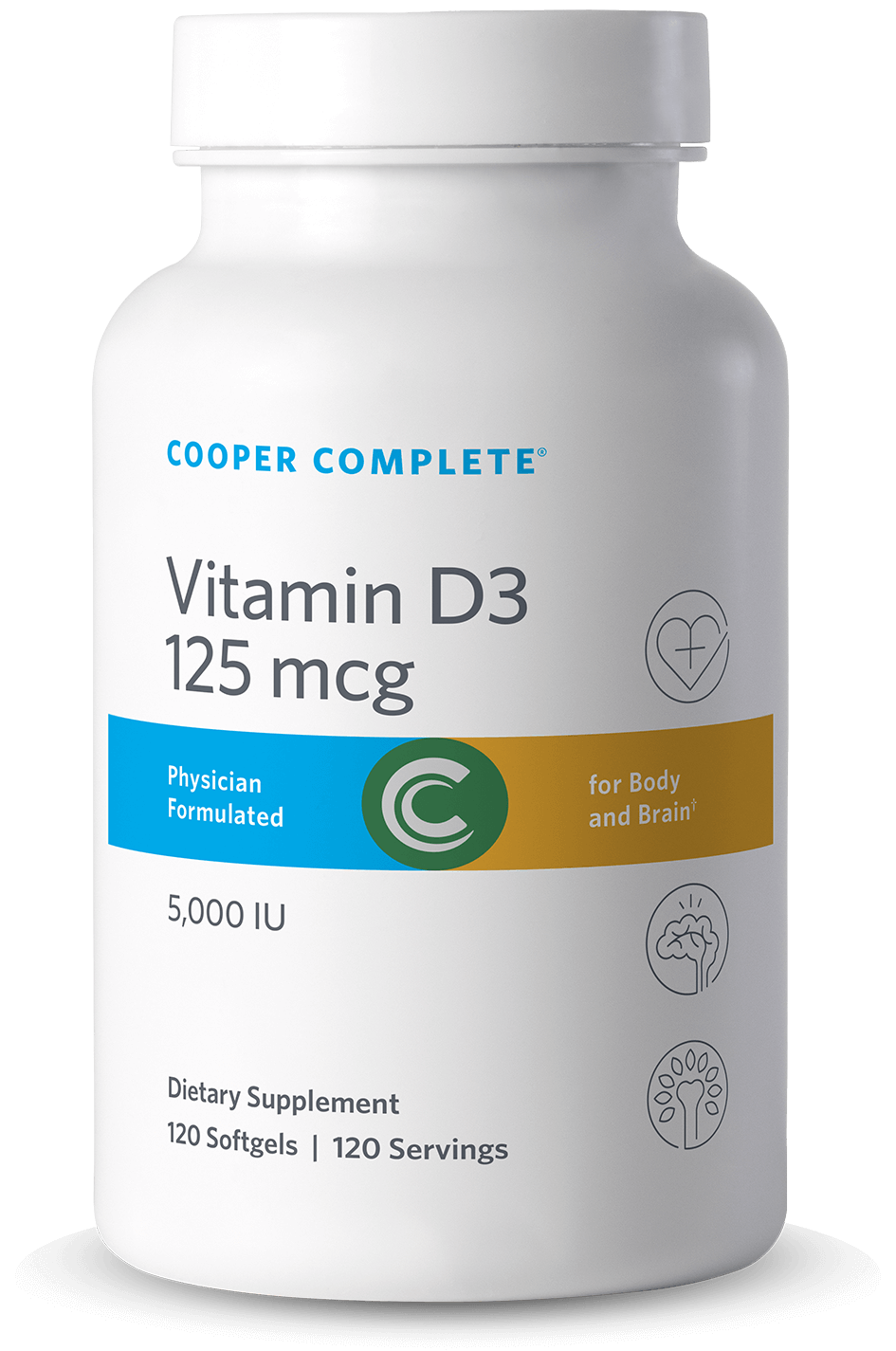
Vitamin D3 125 mcg (5000 IU) Supplement
Vitamin D3 support for bone and immune health.
$26.98 Shop NowGoing back to 2017, a large study (11,321 participants ages 0-95 years) published in The British Medical Journal, titled “Vitamin D Supplementation to Prevent Acute Respiratory Tract Infections: Systemic Review and Meta-analysis of Individual Participant Data,” showed that vitamin D supplementation was safe and protected against acute respiratory infections†. Patients who experienced the most benefit were those who were extremely vitamin D deficient†, and not those receiving single large doses.
Vitamin D and Lung Health†
In 2018, an analysis of vitamin D and respiratory health† in the Busselton Healthy Ageing Study population (in Western Australia) found that blood levels of 25-hydroxy vitamin D less than 20 ng/mL were associated with asthma, bronchitis, wheezing, and chest tightness. Higher vitamin D levels, greater than 40 ng/mL, were associated with a reduction in respiratory symptoms and higher levels of lung function†.
The Irish Medical Journal published an article in 2020, titled “Vitamin D and Inflammation: Potential Implications for Severity of COVID-19.” The authors noted that vitamin D is primarily produced in the skin through exposure to sunlight†. It is transported to the liver and kidneys, where it is converted into an active hormone that enhances calcium absorption from food in the gut and ensures adequate calcium levels to maintain a strong skeleton and prevent osteoporosis†. Additionally, vitamin D can support the immune system through various immune pathways†. This study showed that counterintuitively, in countries at lower latitudes and typically sunny countries such as Spain and northern Italy, people likely used sunscreen to protect against sun exposure, resulting in lower concentrations of vitamin D and higher rates of vitamin D deficiency. These countries also experienced the highest infection death rates in Europe.
Vitamin D and COVID-19: Considerations From Recent Studies†
Since pneumonia and respiratory problems are the most common causes of death in COVID-19 infections, findings from this meta-analysis, “Vitamin D to prevent exacerbations of COPD,” should also be considered (Pak J Med Sci volume 33, 2017). The findings support a strategy of routinely testing vitamin D status in patients with COPD who experience exacerbations and offering supplementation to those with circulating 25-hydroxy vitamin D concentrations of less than 25 ng/mL, but not in those with higher levels.
Vitamin D Across Multiple Health Outcomes: Research Overview†
Research suggests the health benefits of vitamin D† may be associated with fighting many diseases† and could play a role in:
Vitamin D and Cancer: Research Overview
VITAL Trial: Vitamin D and Cancer Outcomes†
The VITAL study was a randomized, placebo-controlled trial, enrolling almost 26,000 men (≥ 50 years of age) and women (≥ 55 years of age) who were treated with either vitamin D3 (50 mcg ( 2000 IU) per day) or placebo and marine n−3 (also called omega-3) fatty acids (1 gram per day) or placebo for the prevention of cancer and cardiovascular disease. (This is called a two-by-two factorial design.) The participants were followed for a median of 5.3 years, with a follow-up range of 3.8 to 6.1 years. The primary endpoints were invasive cancer of any type and major cardiovascular events.
This study concluded that supplementation with vitamin D did not result in a lower incidence of invasive cancer than a placebo. “Incidence of invasive cancer” means new cancer cases diagnosed during the study’s duration.
Why Study Length Matters in Cancer Research
However, the relatively short follow-up period of 3.6 to 6.1 years raises an important question: Can we really test whether any intervention reduces the risk of developing cancer in a study with this short length of follow-up? For most cancers, the answer is no.
Cancers begin as just one cancer cell. This single cancer cell divides to become two cancer cells, then the two cells divide to become four cancer cells, and so on. The division time can vary depending on many factors, such as the type of tumor and the ability of the patient’s body to resist cancer; it can range from days to years, averaging three to four months.
A single cell needs 30 doublings to reach a (generally) detectable size (1 cm, 0.4 inches or a billion cells). For example, if a cancer has a doubling time of three months, it will take 90 months (7.5 years) for it to be detectable by an imaging test or physical examination. In one study of different types of lung cancers, the average doubling time was 303 days for adenocarcinomas and only 70 days for small-cell lung cancer. Thus, the time from cancer initiation to detection could be as long as 25 years and as short as six years. Therefore, it is highly likely that most, if not all, of the “newly diagnosed” cancers identified in the study were already present but not yet detected.
How Vitamin D May Influence Cancer Cells†
While the trial results were limited by study length, laboratory and clinical research have shown that vitamin D may play a role in cancer biology. Studies suggest it can:
- Slow the growth of cancer cells†
- Stimulate cell death†
- Reduce blood vessel growth to tumors†
- Decrease inflammation†
- Stimulate the body’s immune system to fight cancer†
Thus, vitamin D may decrease tumor invasiveness† and the likelihood of tumor metastases†.
Vitamin D and Cancer Deaths†
The results of the VITAL study regarding the impact of vitamin D on death from cancer supported these basic science findings about vitamin D and cancer growth†. The rate of death was not proportional during the duration of the study; this means the rate of death each year was not the same. More than one-third of the cancer deaths occurred in the first two years of the study. These participants who died early clearly had aggressive cancers once diagnosed or cancers diagnosed at an advanced stage.
When the authors analyzed the data without the early cancer deaths during the first two years of follow-up, they found that participants who took vitamin D had a 25 percent reduced risk of dying from cancer†. So even though cancer was present, it was less likely to progress as rapidly, resulting in death.
Impact of Body Weight on Results†
In a subgroup analysis in the VITAL study, participants with a normal body mass index (BMI) < 25 who were treated with vitamin D were significantly less likely to be diagnosed with a new cancer† during the study (almost a 25 percent reduction in risk), suggesting a slowing of tumor growth†. This benefit was extinguished at higher BMI levels. It is well known that excess weight is associated with an increased risk of multiple cancer types; this benefit of vitamin D at the studied supplement dose appears to be extinguished at higher weights.
Limitations of the VITAL Study
Finally, one very important criticism of this trial was the failure to measure vitamin D levels throughout the study in a large number of participants to confirm that vitamin D levels remained constant in the placebo group and increased in the vitamin D group.
Vitamin D and Colorectal Cancer: Immune-Related Findings†
Colorectal Cancer, also called bowel cancer, develops in the colon or the rectum, both parts of the gastrointestinal (digestive) system. The American Cancer Society says that, excluding skin cancers, colorectal cancer is the third most common cancer diagnosed in both men and women in the United States. The American Cancer Society estimates there will be 107,320 new cases of colon cancer and 46,950 new cases of rectal cancer in the United States in 2025.
Published in the health journal Gut, research has shown a link between vitamin D and the immune response to cancer† in a large human population for the first time. “People with high levels of vitamin D in their bloodstream have a lower overall risk of developing colorectal cancer†,” said the study’s lead researcher Shuji Ogino, MD, PhD, from Harvard Medical School and Dana-Farber Cancer Institute. “Laboratory research suggests that vitamin D boosts immune system function by activating T [immune] cells that recognize and attack cancer cells†. In this study, we wanted to determine if these two phenomena are related: Does vitamin D’s role in the immune system account for the lower rates of colorectal cancer in people with high circulating levels of the vitamin†?”
Other Cancer Research on Vitamin D
There is ongoing research surrounding vitamin D and breast cancer and prostate cancer. A study of more than 7,800 participants found that the results from seven eligible studies indicated that a higher vitamin D level was significantly associated with decreased all-cause mortality† and prostate cancer-specific mortality†. Additionally, a 2019 meta-analysis found that vitamin D significantly reduced the overall mortality rate from cancer†.
Vitamin D and Blood Sugar: Insulin Function and Glucose Metabolism†
People with diabetes often have lower vitamin D levels. Research suggests that vitamin D may play a role in supporting insulin function and glucose metabolism†. Some studies have shown that individuals with type 2 diabetes who took vitamin D supplements experienced improved blood sugar control†.
Vitamin D and Body Weight: What Studies Show†
Increasing your vitamin D intake through a balanced diet may support weight management†. In one study, people with obesity who took vitamin D supplements, along with following a weight-loss diet plan, lost more weight and fat mass than those who only followed the diet plan†.
An article (Vitamin D Deficiency: Consequence or Cause of Obesity?) published in 2019 notes that while vitamin D deficiency isn’t a cause of obesity, there is a strong link between the two, theorizing that excess fat, liver and muscle mass may halt the absorption of the nutrient†.
Vitamin D and Mood: Research Overview†
High amounts of vitamin D, especially from sunlight, are shown to help regulate mood and reduce the risk of depression†. A meta-analysis of randomized controlled trials revealed that those experiencing negative emotions who took vitamin D supplements saw an improvement in symptoms†. Another study involving 593 patients concluded low vitamin D levels were a risk factor for fibromyalgia†, anxiety† and depression†.
(Bonus: Read about the nine supplements that may relieve symptoms of depression†.)
Are You Getting Enough Vitamin D?
Vitamin D deficiency is the most common nutritional deficiency worldwide. Lower vitamin D levels are a result of many factors, including:
- Sun avoidance
- Using sun protection (though it is necessary to protect your skin during prolonged time outdoors)
- Skin pigmentation
- Poor dietary and supplement intake
- Malabsorption syndromes
- Obesity
- Medication use
Vitamin D Ranges: Deficient, Normal, and Recommended Supplementation†
To reap the benefits of vitamin D†, your body must get enough. There is only one way to determine your vitamin D level—a blood test called 25-hydroxyvitamin D. The test classifies results as follows:
| How to Interpret Your Vitamin D Blood Test† |
|---|
| BLOOD TEST 25-hydroxy vitamin D |
| Nanograms per milliliter |
| Deficient = <20 ng/mL |
| Insufficient = 21-29 ng/mL |
| Normal = 30-100 ng/mL |
| Toxicity >150 ng/mL |
| Cooper Clinic recommended range = 40-60 ng/mL |
| A MINIMUM OF 2000-4000 IU OF VITAMIN D3 IS RECOMMENDED DAILY |
| 50 mcg Vitamin D3 = 2000 IU |
| 125 mcg Vitamin D3 = 5000 IU |
Vitamin D is a fat-soluble vitamin that needs fat in order to be absorbed. Taking vitamin D with a meal that contains fat can increase absorption by 50 percent†. Cooper Clinic has been testing vitamin D levels in all patients since 2007 and recommends a 25-hydroxyvitamin D level of 40 ng/mL, but some doctors prefer to see lab values over 50 ng/mL.
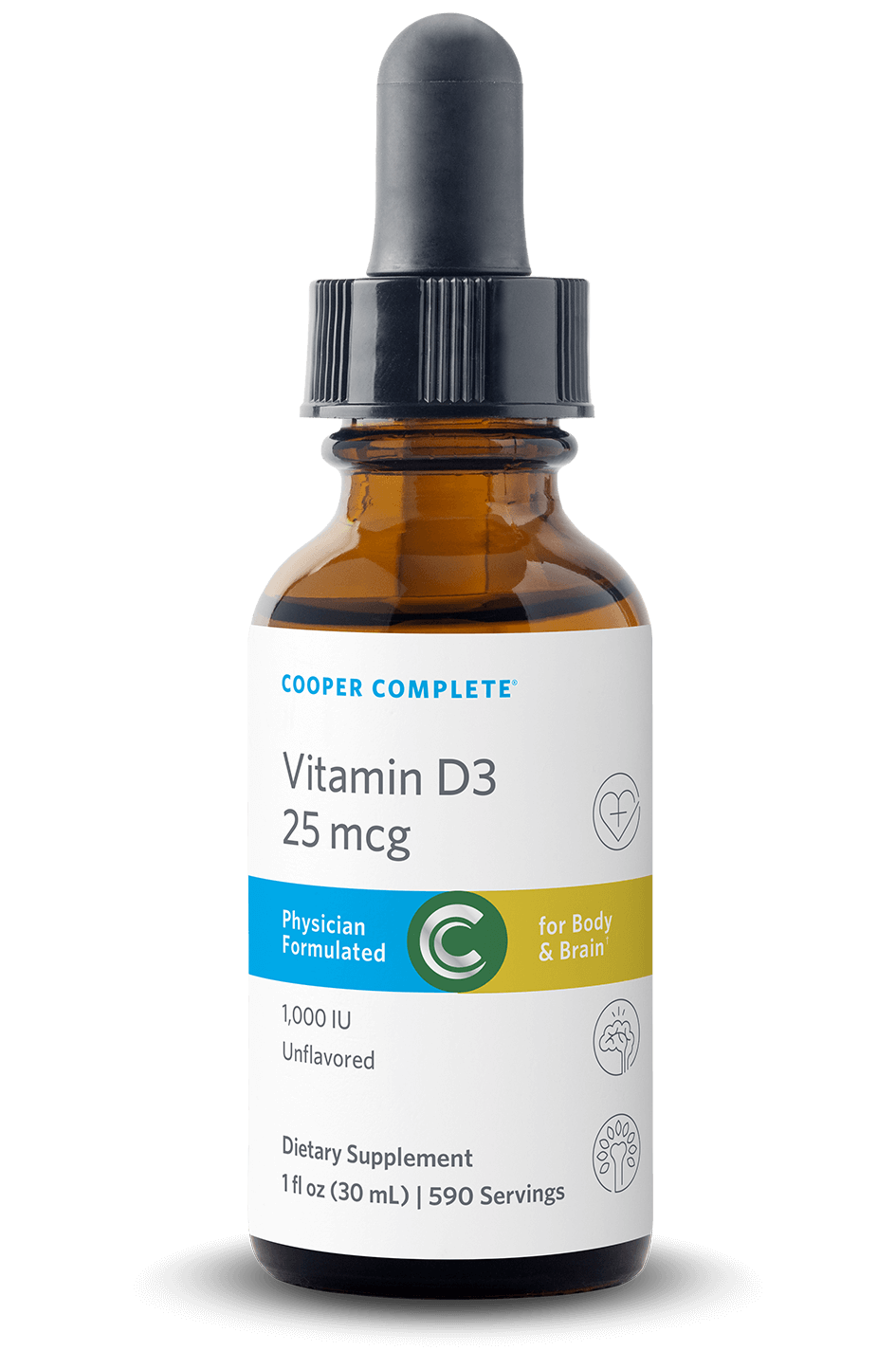
Vitamin D3 25 mcg (1000 IU) Liquid Drops
Vitamin D3 support for bone and immune health. Liquid drops with a one-drop serving for those who prefer not to swallow pills.
$25.98 Shop NowHow to Get More Vitamin D (Sun, Food, Supplements)
Whether it’s through foods, sunlight or supplements, it is important your body gets adequate vitamin D†. Here’s how:
Vitamin D From Sunshine
The best way to get vitamin D is from the sun. It’s estimated that a fair-skinned person in shorts and a tank top without sunscreen receives enough radiation to produce almost 250 mcg (10,000 IU) of vitamin D from 10 minutes of midday sun. However, the amount of vitamin D your body produces differs depending on the time of day and the time of year. For example, the further north you live, the harder it is for your body to produce vitamin D in the winter. This effect is mirrored the further south of the equator that you live.
For your body to produce vitamin D, the sun should be positioned in the sky so your shadow is shorter than you. If your shadow is longer than you, the sun’s UV rays are not intense enough for vitamin D production.
A good rule of thumb is to try to get sun exposure when the sun is in its highest position (typically around midday) for half as long as it takes your skin to become pink. After exposure, the nutrient is stored and released when sunlight is unavailable.
Incidentally, this is where D gets its cheery nickname, “the sunshine vitamin.” It begins when your skin absorbs UVB rays from the sun and uses them to make vitamin D. Next, your skin absorbs the UV light and uses a process called “photolysis” to form vitamin D. The newly created vitamin D then travels to the liver to perform its bodily functions†. While the sun is the most natural way to get vitamin D, many factors prohibit this process from producing optimal levels, including:
- Some seasons
- Where someone lives
- Age and skin color
- Distance from the equator
In the warmer months, sunscreen use not only prevents an uncomfortable sunburn but also prevents vitamin D absorption by blocking UVB light up to 99 percent at SPF 30. For good dermatological health, sunscreen is necessary, so conscientious users must find alternative ways to obtain vitamin D†.
Vitamin D From Food
Vitamin D, although found in food, is not abundant. Seafood is your best bet for consuming vitamin D naturally. Many products are being fortified with vitamin D. Fortified milk, orange juice, yogurt, and cereal are among the most popular options. However, it is still unlikely that you will get the desired level of vitamin D solely from food sources†. Here are some food options that can help increase your intake:
- Fatty fish such as salmon (447 IU), tuna (70 IU) and mackerel (855 IU) per 3 ounces
- Beef liver – 50 IU in a 3.5 oz
- Cheese – 7 IU per 1 oz of cheddar
- Egg (whole large) – 41 IU (1 mcg)
- Mushrooms – 400 IU per serving (if exposed to UV light)
- Fortified milk – 115-125 IU (3 mcg) per cup
- Fortified breakfast cereal – 40 IU (1 mcg) per cup
- Sardines – 270 IU (7 mcg) in 3.5 oz
- Some orange juice (137 IU), yogurt (80-120 IU) and drinks with soy (100-119 IU) are fortified
We all agree that a balanced, nutritious diet is the best way to obtain necessary nutrients, but building a diet with 50+ mcg (2000+ IU) of vitamin D from natural and fortified foods is incredibly challenging.
Vitamin D Supplements – D3 vs. D2?
Getting enough vitamin D through sunlight and food can be difficult. As we age, our bodies undergo natural changes. But supplementation can help ensure you get the health benefits of vitamin D†. There are two forms of vitamin D supplements available (D2 and D3). However, most studies indicate that D3 is more easily absorbed by the body†, which is why our Cooper Complete vitamin D supplements utilize the D3 form†.
Since 2007, Cooper Clinic has measured the blood level of 25-hydroxy vitamin D in more than 80,000 healthy patients. The patient population, including many people of color, mirrors the findings from studies that show people of color have lower levels of vitamin D unless they are taking vitamin D supplements†. Cooper Clinic recommends that all patients with values less than 40 ng/mL take at least 2000 IU (50 mcg) of vitamin D3 daily†. By following this recommendation, return patients have seen 25-hydroxy vitamin D values rise from 30 ng/mL to almost 40 ng/mL over the years.
Vitamin D supplements can help raise vitamin D levels†. Cooper Complete tabletted multivitamins contain 50 mcg (2000 IU) of vitamin D. Additionally, Cooper Complete offers stand-alone D3 supplements. (Bonus: Learn more about the difference between Vitamin D and D3.)
Conclusion: Key Takeaways on Vitamin D†
Vitamin D does far more than support strong bones. From immune system function and mood balance to inflammation support and cellular health†, the health benefits of vitamin D make it an essential nutrient for nearly every stage of life. While sun exposure and diet can help, many people need a supplement to reach and maintain an optimal level of vitamin D†. If you’re unsure whether you’re getting enough vitamin D, ask your physician or health care provider if a simple blood test to assess your levels is appropriate. With the right approach, you can ensure your body has what it needs to thrive.
About the Author: Jill Turner is the President of Cooper Complete® Nutritional Supplements, where she oversees product development and customer experience. She enjoys writing about vitamins, supplements, and preventive health to help consumers make informed, science-backed decisions.
Sources:
- National Institutes of Health (NIH), Office of Dietary Supplements — Vitamin D Fact Sheet for Health Professionals
- Harvard T.H. Chan School of Public Health — Faculty Profile: Shuji Ogino, MD, PhD
- Harvard Health Publishing — Vitamin D and Your Health: Breaking Old Rules, Raising New Hopes
- Johns Hopkins Medicine — Malabsorption: Symptoms and Causes
- PubMed Central (PMC) — Vitamin D: New Insights on Its Effects on Skeletal and Extra-Skeletal Health
- PubMed — The Role of Vitamin D in Human Nutrition
- PubMed — Vitamin D and Mortality in Adults
- PubMed — Vitamin D and Cardiovascular Disease Prevention
- PubMed — Vitamin D and Cancer Prognosis
- PubMed — Vitamin D and Diabetes Risk
- PubMed — Vitamin D and COVID-19: Evidence and Uncertainties
- PubMed Central (PMC) — Vitamin D and Immune Function
- PubMed Central (PMC) — Vitamin D and Cancer: An Overview of Recent Studies
- PubMed Central (PMC) — Vitamin D, Immunity, and Autoimmune Disease
- PubMed Central (PMC) — Vitamin D and Brain Health
- BMJ — Vitamin D Supplementation and Prevention of Acute Respiratory Tract Infection
- BMJ — Vitamin D Supplementation to Prevent Acute Respiratory Infections: Systematic Review and Meta-Analysis of Aggregate Data
- Gut (BMJ) — Gut Journal: Research on Nutrition, Immunity, and Digestive Health
- Thorax (BMJ) — Vitamin D and Chronic Lung Disease
- Irish Medical Journal — Vitamin D and Inflammation: Potential Implications for Severity of COVID-19
- ViDA Study — Vitamin D and Omega-3 Trial (VITAL)
- Cooper Aerobics — Supplements for Autoimmune Disease (by Nina Radford, MD, FACC)