
Top Vitamin E Benefits In A Multivitamin

Categories
- All Posts
- Wellness in Business
- Nutrition Bites
- Exercise Moves
- Fitness Files
- Prevention Plus
- Vitamin Aisle
- Recipes - Entrees
- Recipes - Side Dishes
- Recipes - Snacks
- Recipes - Desserts
- Recipes - Breakfast
- Recipes - Appetizers
- Recipes - Salad
- Recipes - Soups
- Cooper Stories
- Self-care
- Dr. Cooper's 8 Healthy Steps
- Skin Care
Did you know vitamin E is an essential nutrient that supports overall health†? As a powerful antioxidant, vitamin E plays multiple roles in the body. Yet many people following a typical North American diet typically do not get enough vitamin E through food alone.
In this article, we explore what vitamin E is, how it supports the body, who might be at risk for low levels, and how to ensure you’re getting enough.
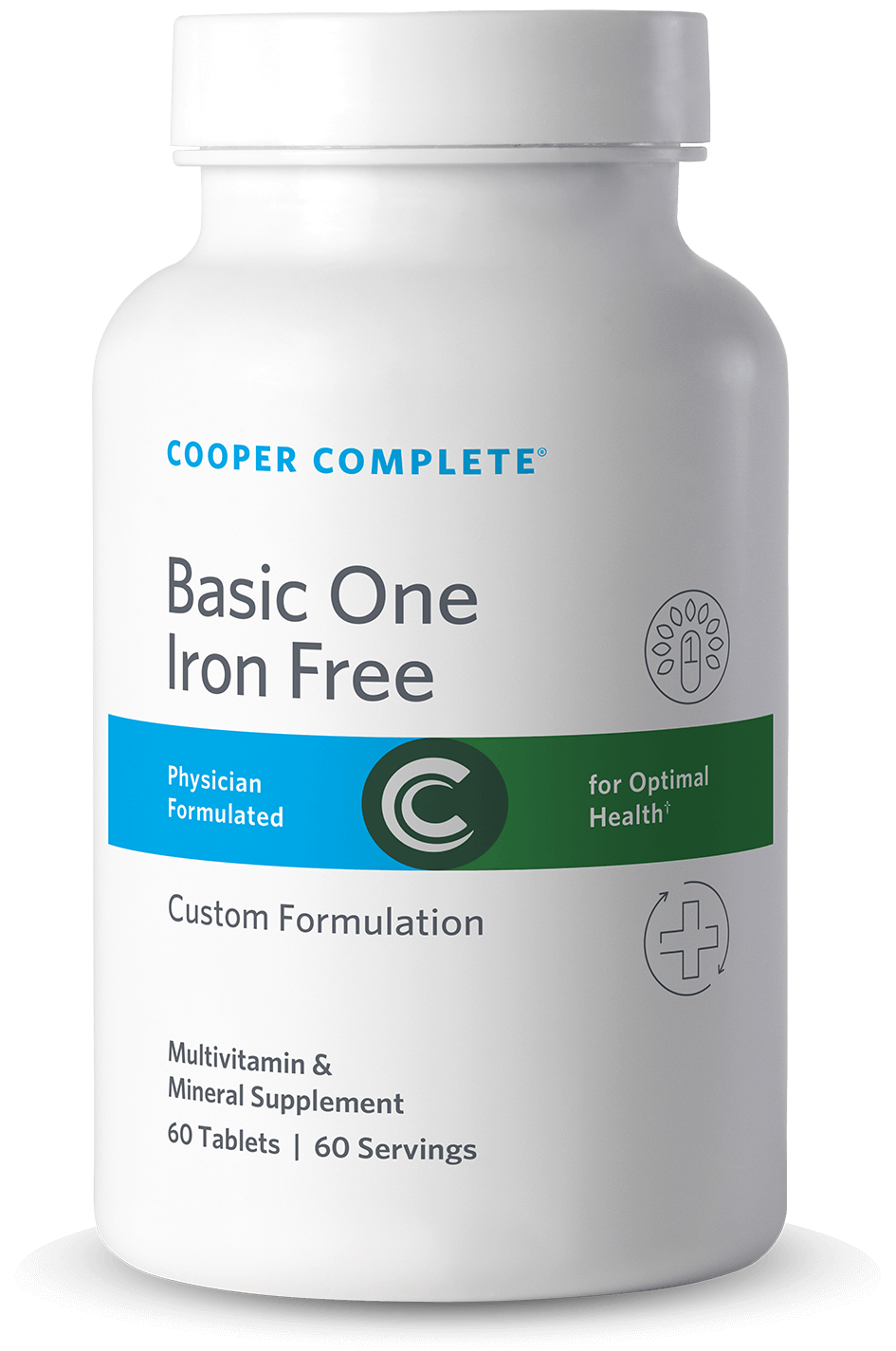
Basic One Daily Multivitamin Iron Free
Foundational multivitamin support for daily nutrition, providing essential nutrients at meaningful levels.
$31.48 Shop NowWhat Is Vitamin E?
Vitamin E is:
- A fat-soluble vitamin that protects cells from oxidative stress†
- Naturally found in eight forms (four tocopherols and four tocotrienols)
- The alpha-tocopherol form is the most biologically active and is commonly used in supplements†
- Acts as an antioxidant, helping protect cells from free radicals† (unstable atoms that tend to accumulate by attaching to other atoms, causing oxidative stress†)
How Vitamin E Supports the Body†
Vitamin E has several important functions in the body, including:
- Antioxidant defense – Helps protect cells from oxidative damage
- Immune system support – Supports normal immune function
- Skin health – Contributes to the maintenance of healthy skin
- Eye health – Helps maintain healthy eye tissue and function
- Cell function – Involved in cell signaling and gene expression
Top Food Sources of Vitamin E
Vitamin E is found in a range of foods, including:
- Nuts and seeds – Almonds, hazelnuts, and sunflower seeds are rich sources. Peanuts and pine nuts provide moderate amounts, while pecans, pistachios, and cashews offer lower amounts.
- Vegetable oils – Including wheat germ, sunflower, safflower, soybean, canola, olive, and avocado oils
- Green leafy vegetables – Such as spinach, chard, kale, mustard greens, collard greens, and broccoli
- Whole grains – Wheat, barley, farro and oats
- Fortified foods – Breakfast cereals and some margarines and spreads
Although vitamin E is found in many foods, most Americans do not obtain adequate amounts of vitamin E solely through their diet.
Who Might Need More Vitamin E?
People who don’t routinely eat a lot of green leafy vegetables, nuts or seeds may need additional vitamin E, and so may the following:
- Older adults who may have low dietary intake or decreased absorption
- People with rare genetic disorders affecting vitamin E absorption
- Individuals on very low-fat diets
- Those following high-protein diets
- Adults with fat-malabsorption conditions
Vitamin E in Supplements
Vitamin E is sometimes seen as a standalone supplement and is regularly included in multivitamins, including all Cooper Complete multivitamins.
Key considerations:
- Natural vs. synthetic forms – Natural vitamin E is d-alpha-tocopherol, while the synthetic form is dl-alpha-tocopherol. While some synthetic and natural vitamins perform similarly in the body, this is not the case with vitamin E. Natural d-alpha-tocopherol is more bioavailable than synthetic dl-alpha-tocopherol†. (It may help to think of the “d” as delivering, while “dl” delivers less.)
- Cooper Complete formulations (multivitamins, Eye Health and Dermatologic Health) use natural d-alpha tocopherol for better absorption†
- The Recommended Daily Allowance (RDA) of vitamin E for adults is 15 mg (22.4 IU)
- The Upper Intake Level (UL) from supplements is 1,000 mg (1,500 IU) per day
Final Thoughts
Vitamin E is a vital nutrient that helps protect cells and supports immune function, skin, and eye health†. If your diet isn’t optimal, a high-quality multivitamin containing natural vitamin E may help fill in the gaps†.
At Cooper Complete, we offer supplements designed to meet a variety of individual needs of every lifestyle. Taking the right supplements for you† is one of the 8 steps to get Cooperized™. As always, talk with your physician or health care provider about what’s best for your health needs†.
About the Author: Jill Turner is the President of Cooper Complete® Nutritional Supplements, where she oversees product development and customer experience. She enjoys writing about vitamins, supplements, and preventive health to help consumers make informed, science-backed decisions.