
Top 3 Gut Conditions
Categories
- All Posts
- Wellness in Business
- Nutrition Bites
- Exercise Moves
- Fitness Files
- Prevention Plus
- Vitamin Aisle
- Recipes - Entrees
- Recipes - Side Dishes
- Recipes - Snacks
- Recipes - Desserts
- Recipes - Breakfast
- Recipes - Appetizers
- Recipes - Salad
- Recipes - Soups
- Cooper Stories
- Self-care
- Dr. Cooper's 8 Healthy Steps
- Skin Care
Having an unhealthy gut can negatively impact your health. Gut health affects the immune system, mental health, cardiovascular system, sleep and digestion. While good nutrition and exercise can make a difference, understanding what’s going on inside the body is important. Cooper Clinic Gastroenterologist Andrew Gottesman, MD, shares three most common health conditions he finds with Cooper Clinic patients during their GI visits:
- Colon cancer and colon polyps
- Gastroesophageal reflux disease (GERD)
- Irritable bowel syndrome (IBS)
1. Colon Cancer
“Colon cancer affects 1 in 20 people, but 90% of the time it is completely preventable,” says Dr. Gottesman. Colon cancer arises from colon polyps, benign growths in the colon, which are found in 30-40% of the population over age 45. Not all polyps are pre-cancerous. While doing a colonoscopy, your GI doctor may identify polyps and completely remove them. “Even if the biopsy comes back negative, it is still recommended that the polyps be removed to ensure they do not turn into cancer in the future,” says Dr. Gottesman. “The removal of polyps greatly decreases the risk of developing into cancer cells by 90%.”
The Centers for Disease Control and Prevention recommends all individuals over the age of 45 who have no personal or family history of colon cancer or colon polyps undergo colonoscopy. Cooper Clinic recommends its patients to start colonoscopies at the age 40. “Colonoscopy isn’t just meant to find colon cancer, but to find colon polyps and remove them to prevent colon cancer.” In a group of 100 people, Dr. Gottesman says 40% of the time he will find pre-cancerous polyps during a screening.
For those with a family history of colon cancer or colon polyps, Dr. Gottesman shares, “if your sibling is diagnosed with colon cancer or colon polyps at the age of 45, it is recommended to get screened 10 years before your sibling’s age, so you would start your screening at the age of 35.” Based on your results, your GI doctor or pathologist will determine the frequency of your routine screenings.
Unfortunately, many patients with colon cancer and colon polyps have no symptoms. But warning symptoms which should be further evaluated by your gastroenterologist include:
- Rectal bleeding
- Anemia
- Unexplained weight loss
- Change in bowel habits
2. Gastroesophageal Reflux Disease (GERD)
GERD is a common condition affecting nearly 20% of adults, where acid in the stomach flows backwards into the esophagus. This acid irritates or burns the lining of the esophagus. Common symptoms include:
- Heartburn, a burning sensation in the chest, often after eating or lying down after eating
- Regurgitating after eating a meal
- Chest pain
- Difficulty swallowing
If frequent heartburn is left untreated, it can permanently damage the lining of the esophagus, leading to strictures (narrowing of the esophagus) and changes to the lining of the esophagus, Barrett’s esophagus, which can lead to esophageal cancer. “GERD literally burns the lining of the esophagus,” says Dr. Gottesman.
What causes GERD?
- Eating within four hours before bed
- Taking certain medications such as Advil, Motrin, Nuprin, Excedrin, Anacin and Bufferin
- Consuming alcohol
- Using nicotine
- Obesity
Lifestyle changes are most important to decrease the likelihood of developing GERD. Most importantly, avoid eating or drinking within 4 hours of going to sleep, limit alcohol and stop smoking.
If you continue to have mild reflux, elevating the head of the bed is often helpful. If symptoms continue, Pepcid, Prilosec or famotidine are over-the-counter remedies which reduce stomach acid and decrease the frequency of GERD.
3. Irritable Bowel Syndrome (IBS)
“Irritable bowel syndrome (IBS) is most common in younger people,” explains Dr. Gottesman. IBS is a miscommunication between the gut and brain. The gut has its own nervous system called the enteric nervous system; this system communicates with the brain’s central nervous system. With IBS, communication gets disrupted causing bloating, distension and irregular bowel movements such as constipation and diarrhea, typically worsening throughout the day. Blood work, colonoscopy and CT scan are generally normal. Interestingly, patients with IBS have a visceral hypersensitivity, where people feel a mild stimulus much more strongly than others.
IBS can sometimes be difficult to treat but is generally manageable. Many people get better by simply changing their diet. “I recommend patients with IBS to start on a restricted diet called FODMAP,” says Dr. Gottesman. FODMAP stands for fermentable oligosaccharides, disaccharides, monosaccharides and polyols and this diet avoids sugars that cannot be properly digested. “The FODMAP diet works about 50% of the time,” says Dr. Gottesman. For patients who do not respond well to a low FODMAP diet, another option is using a very low-dose of an antidepressant such as amitriptyline. This increases the level of serotonin in the gut, which is thought to relieve many of the symptoms of IBS.
Learn more about how to keep up with good gut health with the Prevention Plus article, Staying Proactive on Gut Health.
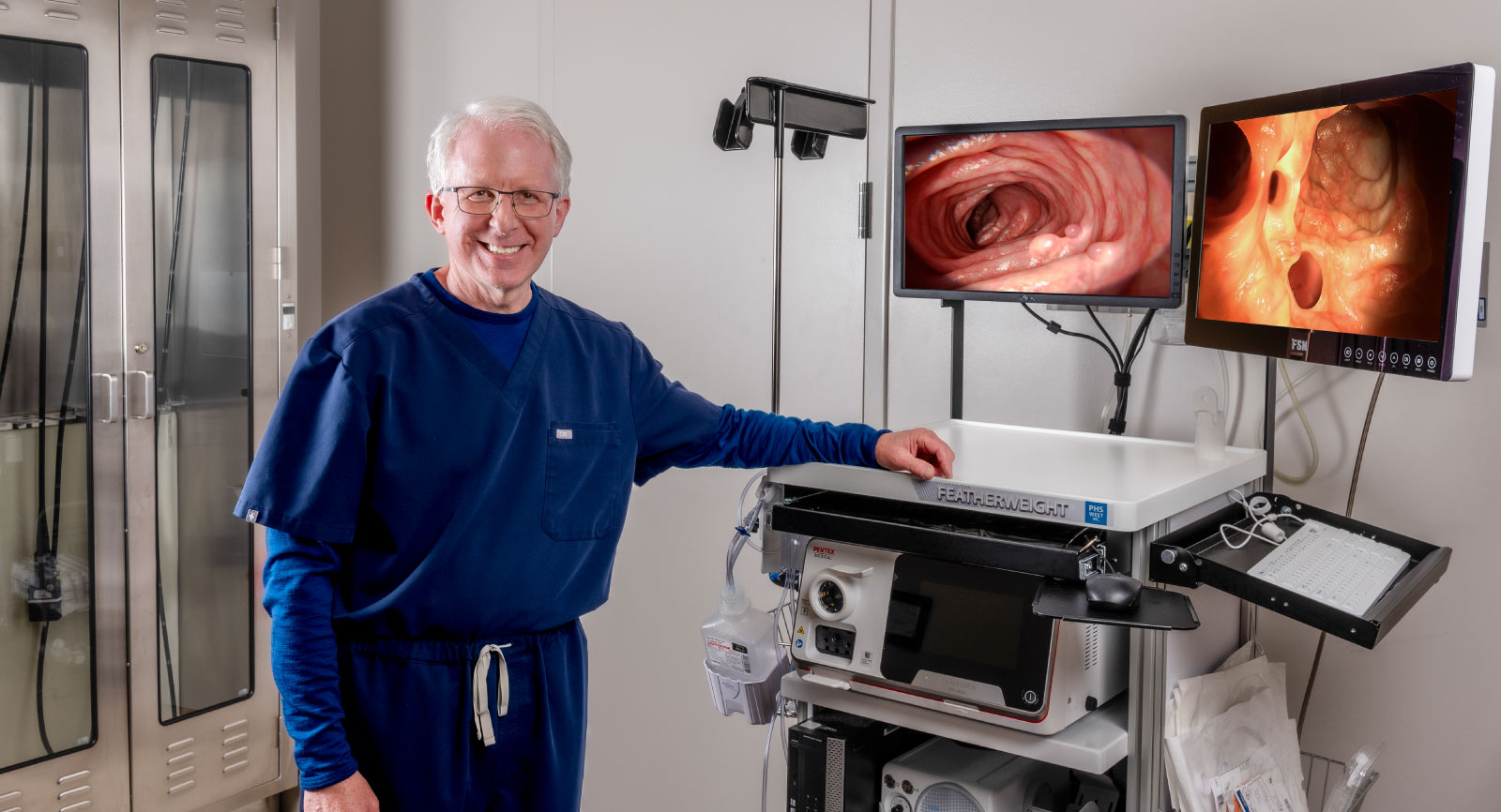
Take the first step to improving your gut health by scheduling a GI consultation. Cooper Clinic Gastroenterology provides on-site colonoscopy and endoscopy using the latest technologies. Our practice surpasses the national standard. Andrew Gottesman, MD, a board-certified gastroenterologist and our nursing staff, with nearly 30 years of experience, provide personalized care and a clear picture of our patients’ health. A limited number of patients are seen daily with flexible scheduling and thorough pre- and post-procedure follow-up. Call 972.560.3255 to schedule an appointment.