
Stroke Awareness and Prevention – Are There Supplements For Stroke Prevention?

Categories
- All Posts
- Wellness in Business
- Nutrition Bites
- Exercise Moves
- Fitness Files
- Prevention Plus
- Vitamin Aisle
- Recipes - Entrees
- Recipes - Side Dishes
- Recipes - Snacks
- Recipes - Desserts
- Recipes - Breakfast
- Recipes - Appetizers
- Recipes - Salad
- Recipes - Soups
- Cooper Stories
- Self-care
- Dr. Cooper's 8 Healthy Steps
- Skin Care
According to the Centers for Disease Control and Prevention (CDC), someone has a stroke every 40 seconds in the U.S.—with someone dying from stroke every 3 minutes and 11 seconds—making it the leading cause of death. Nearly 800,000 people have strokes each year, with women accounting for 60 percent of all cases in the U.S. We explore stroke risk factors, stroke symptoms to know, lifestyle modifications that reduce stroke risk factors, and whether there are vitamins and supplements for stroke prevention†.
What are the Risk Factors for Stroke?
A stroke is a loss of blood flow to the brain, cutting off the oxygen and vital nutrients it needs. Accounting for about 87 percent of all strokes, the most common type is the ischemic stroke, which occurs when blood flow to the brain is reduced or cut off by a blood clot or narrowing of an artery. The less prevalent hemorrhagic strokes occur when a weakened blood vessel ruptures, causing bleeding in or around the brain.
The risk factors for stroke—some of which are also risk factors for coronary heart disease, including heart attack—include:
- High blood pressure. The leading cause of stroke, hypertension, can lead to weakening of blood vessel walls.
- High cholesterol. Cholesterol build-up can lead to narrowing of the arteries and stroke.
- Diabetes. Over time, excessive blood glucose can lead to the formation of fatty deposits or blood clots in blood vessels. These clots can narrow or block blood vessels in the brain or neck, cutting off the blood supply and preventing oxygen from reaching the brain, which can cause a stroke.
- Smoking
- Physical inactivity
There are also clinical conditions associated with an increased risk of stroke, including:
- Atrial fibrillation
- Sleep apnea
- Carotid artery disease
Identifying the Onset of a Stroke
Early recognition of stroke and quick action are critical to saving lives and preventing long-term disability. Whether it is ischemic or hemorrhagic, the signs of stroke are the same. The acronym BEFAST is an easy guide for identifying those signs and taking immediate action when encountering someone who may be having a stroke.
BE FAST
Balance. Does the person have a loss of balance or physical coordination?
Eyes. Do they have blurred or loss of vision in one or both eyes?
Face drooping. Can the person smile when asked to do so? Does their face droop on one side?
Arm weakness. Can they raise both arms? Does one arm drift downward, or is it unable to be raised?
Speech difficulty. Can they repeat a simple phrase, or do their answers sound slurred or garbled?
Time to call 911 if you see any of these signs.
Lifestyle Modifications Reduce Stroke Risk
The CDC estimates that about 80 percent of strokes are preventable by following a series of common-sense lifestyle modifications, similar to those included in Dr. Kenneth Cooper’s 8 Steps to Get CooperizedTM. According to the American Stroke Association, the following steps can help prevent stroke:
- Get regular physical activity and maintain a healthy weight. Exercise helps reduce the risk factors for stroke†.
- Eat a healthy diet. Avoid foods high in saturated fats, trans fats and cholesterol, and limit sodium intake to reduce blood pressure†.
- Get regular medical checkups. Your physician is your partner for good health. Share how you’re feeling and listen to their advice.
- Reduce stress and prioritize sleep. Meditate or take time to relax each day by “turning off” the noises around you†.
- Don’t smoke or vape. Nicotine raises blood pressure, carbon monoxide reduces the amount of oxygen the blood can carry, and smoking damages the heart and blood vessels.
- Limit alcohol intake. Women and men should have no more than one drink per day.
- Know your blood pressure. Check it regularly and keep a log of your numbers.
- Take your medications as directed. Don’t skip doses; talk with your doctor if you’re experiencing unexpected side effects.
Supplements For Stroke Prevention and Its Risk Factors
Supplements can play a role in managing key risk factors for stroke prevention, such as high blood pressure†, cholesterol levels†, and inflammation†. Below are some of the most effective nutrients associated with reducing stroke risk†.
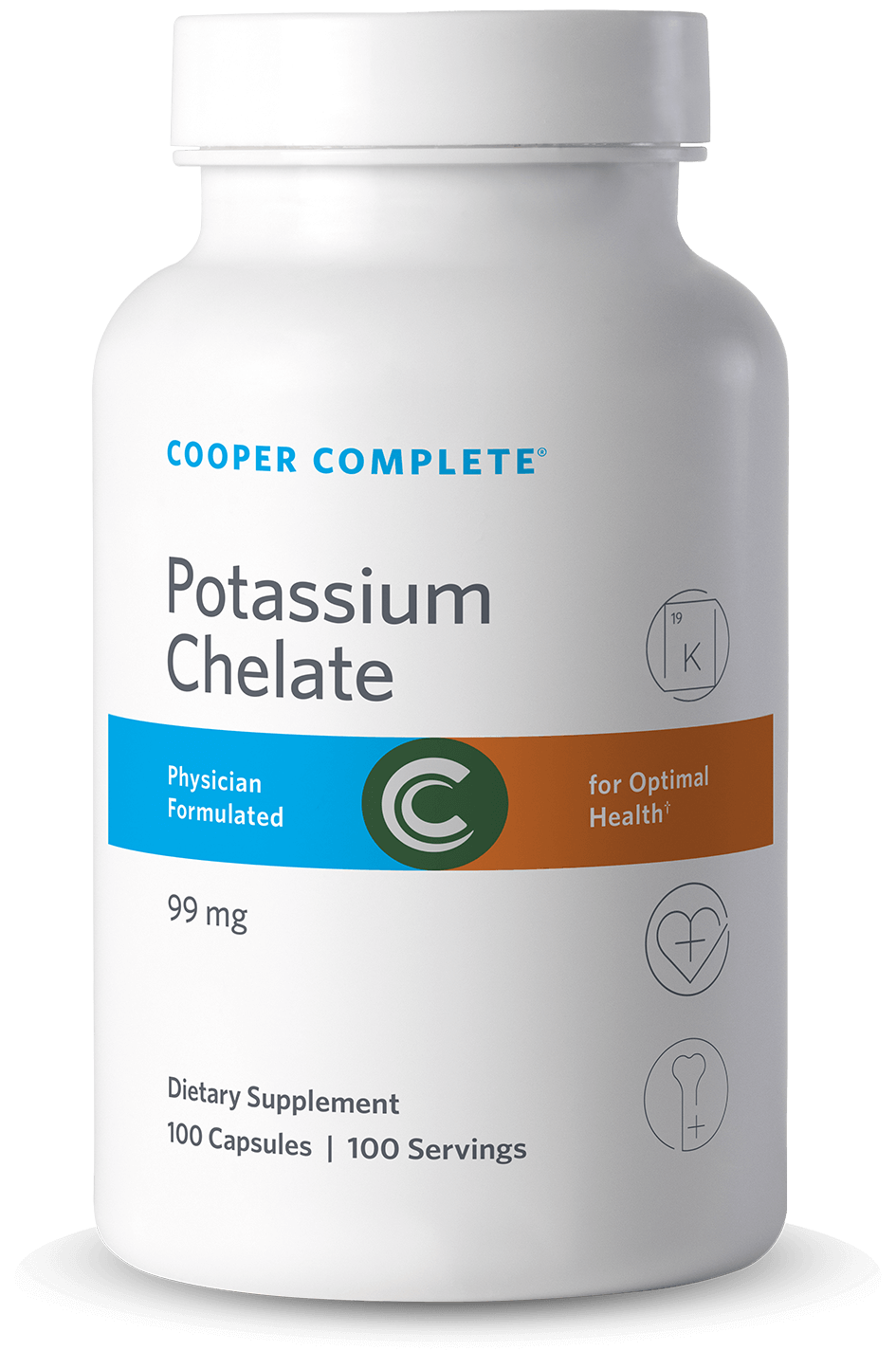
99 mg Potassium Complex Supplement
Multi-form potassium designed to support cardiovascular function, muscle health, and electrolyte balance.†
$17.48 Shop NowPotassium
Potassium is a mineral and electrolyte essential for proper heart† and kidney function†, as well as muscle contraction† and nerve transmission†. Foods rich in potassium include dried apricots, lentils, prunes, white beans, sweet potatoes, leafy greens, soybeans, bananas and avocados.
Potassium helps relax blood vessels† and helps the kidneys flush excess sodium†, both of which decrease blood pressure†. The average American adult, however, consumes more dietary sodium than dietary potassium each day, increasing the risk of death by heart attack†.
A study of 12,267 U.S. adults examined all-cause, cardiovascular, and ischemic heart disease mortality. After multivariable adjustment, higher sodium intake was associated with increased all-cause mortality, whereas higher potassium intake was associated with lower mortality risk†.
Conversely, a meta-analysis of 16 studies showed subjects consuming the highest levels of dietary potassium had a 13 percent lower risk of stroke† compared to those consuming the lowest levels of dietary potassium†. In a study published in the American Heart Association/American Stroke Association Journals involving more than 90,000 post-menopausal women aged 50 to 79, the risk of all types of stroke was reduced by 21 percent†, and the risk of ischemic stroke was reduced by 27 percent† among those with higher levels of dietary potassium intake†.
Each Cooper Complete Potassium Chelate capsule contains 99 mg of elemental potassium from an amino acid chelate to support heart†, brain†, bone†, kidney† and muscle health†. Cooper Complete Original Comprehensive Multivitamin contains 400 mg of potassium per daily serving.
Vitamin D
Studies consistently point to the cardiovascular health benefits of maintaining adequate levels of vitamin D†. Ensure your daily diet includes foods rich in vitamin D, such as fatty fish like tuna, salmon, and sardines—also key sources of omega-3 fatty acids—fortified milk and cereals, orange juice, egg yolks, liver, cheese, and mushrooms. Vitamin D deficiency is associated with an increased risk of cardiovascular disease†, including heart attack†, heart disease† and stroke†.
Cooper Complete Vitamin D3 is available in 25 mcg (1000 IU) and 125 mcg (5000 IU) softgels, as well as 25 mcg (1000 IU) liquid drops. Cooper Complete multivitamins contain 50 mcg (2000 IU) of vitamin D.
Magnesium
The fourth most abundant mineral in the body, magnesium is essential for optimal health†, delivering several health benefits†, including support for heart†, bone†, and sleep health†, while increasing energy production†. To help ensure adequate levels of magnesium in your body, incorporate foods rich in magnesium into your diet, such as leafy greens, potatoes, nuts, legumes, dairy or soy milk, seeds, and whole grains†.
A randomized study suggests that high magnesium levels may reduce the risk of ischemic stroke† through the reduction of blood pressure†, arterial stiffness†, insulin resistance†, oxidative stress†, and the risk of type 2 diabetes†.
Cooper Complete offers two forms of magnesium supplements. Magnesium Glycinate contains 120 mg in each daily serving to support heart†, bone health†, energy production†, and relaxation†. Cognitive Health contains 2 grams of magnesium L-threonate, a form uniquely designed to directly nourish the brain† with magnesium by crossing the blood-brain barrier†. Cognitive Health helps memory† and cognition† while supporting mental† and emotional well-being†. In addition, it supports restful sleep† with increased REM sleep time†. A powdered, scoopable Cognitive Health product is also available, containing magnesium L-threonate, magnesium glycerophosphate, and magnesium acetyl taurinate†. Cooper Complete Basic One Daily multivitamin contains 200 mg of magnesium, while Original Comprehensive multivitamin contains 660 mg of magnesium.
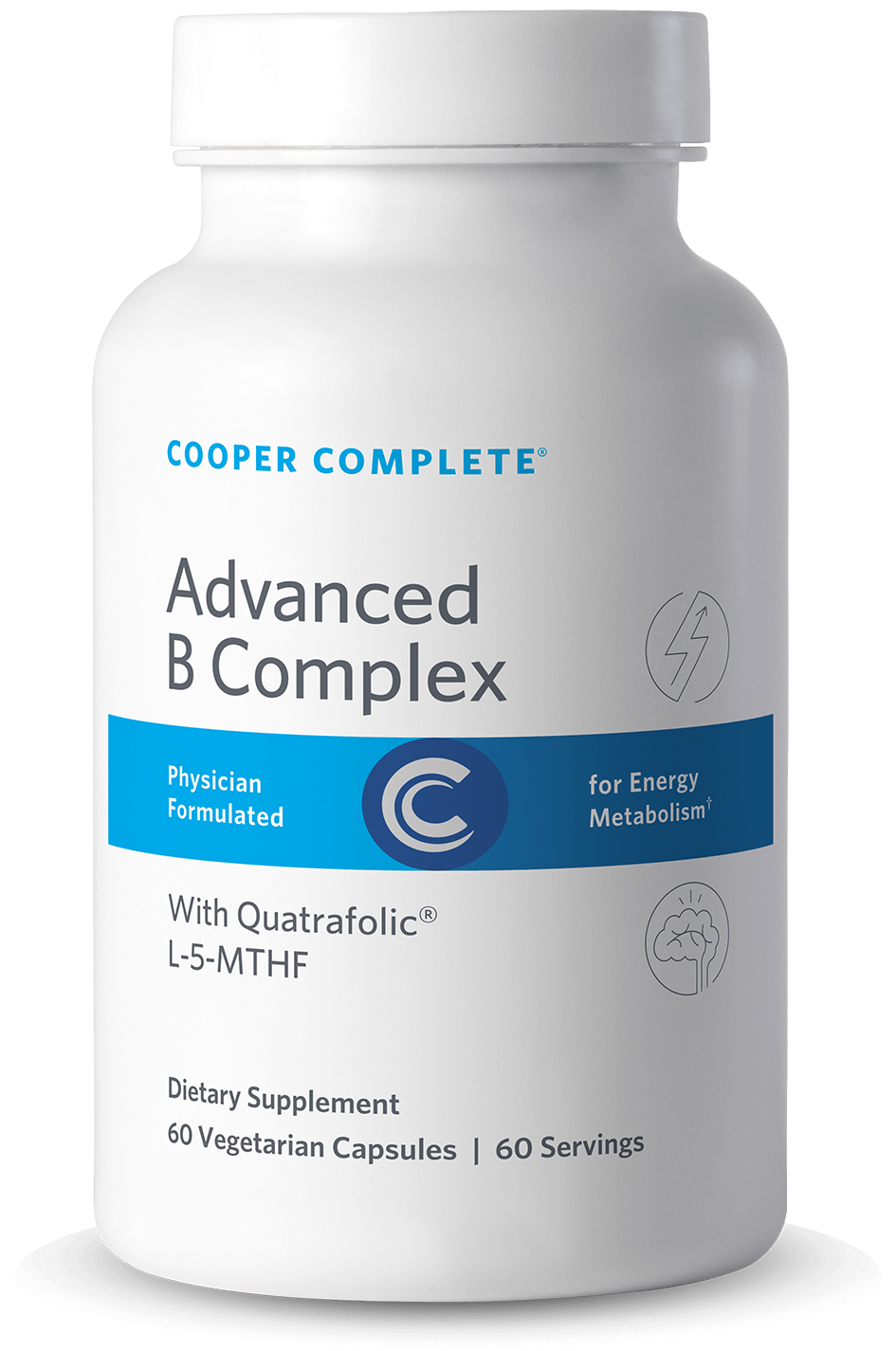
Advanced B Complex Supplement
B-vitamin support for energy production and nervous system health.
$23.68 Shop NowCoenzyme Q10 (CoQ10)
CoQ10, also known as Coenzyme Q10, is a powerful antioxidant found in the cells of the body that converts food into energy†. The antioxidant properties of CoQ10 can neutralize free radicals†, which damage cell membranes and can lead to cell death, and may reduce or help prevent the damage they cause†. Foods containing CoQ10 include organ meats such as liver and kidney, as well as spinach, broccoli and cauliflower.
Cooper Complete offers CoQ10 Ubiquinol—the antioxidant form that provides advanced antioxidant support for optimal heart† and immune function†—available in 50 mg and 100 mg formulations.
B Vitamins
B vitamins help convert the food we eat into energy and are essential for brain function† and promoting optimal heart health†. Because the body does not produce B vitamins, they must be consumed through diet and supplementation. Specifically with vitamin B12, the body’s ability to absorb this vitamin declines with age†. And since the primary food sources of B12 are animal proteins, supplementation is especially important for those following a plant-based diet†.
A meta-analysis studying the effectiveness of vitamin B supplementation among stroke patients revealed that B vitamins can lower the plasma levels of homocysteine† and reduce the recurrence of stroke† and vascular death†.
Other studies show supplementation with B vitamins—including B9, B12 and vitamin B6— lowers homocysteine concentrations in the blood by about 25 percent† and the associated risk of stroke overall by about 10 percent†, so they are essential components of effective supplements for stroke prevention strategies†.
Cooper Complete Advanced B Complex contains the most easily absorbable forms of the eight essential B vitamins.
Learn more about the health benefits of all eight B vitamins†.
It is important to talk with your physician before adding any new supplement to your regimen. Your physician understands your health profile best, so discuss with them which supplements for stroke prevention† are most suitable for you and your specific risk for cardiovascular disease† and stroke†.
About the Author: Cathy Sides is the Director of Customer Relations for Cooper Complete® nutritional supplements. Since joining Cooper Aerobics in 2007, she has helped customers make informed decisions about supplements. Cathy also contributes blog content focused on vitamins, supplements, and healthy living.