
Are All Fats Created Equal?
Categories
- All Posts
- Wellness in Business
- Nutrition Bites
- Exercise Moves
- Fitness Files
- Prevention Plus
- Vitamin Aisle
- Recipes - Entrees
- Recipes - Side Dishes
- Recipes - Snacks
- Recipes - Desserts
- Recipes - Breakfast
- Recipes - Appetizers
- Recipes - Salad
- Recipes - Soups
- Cooper Stories
- Self-care
- Dr. Cooper's 8 Healthy Steps
- Skin Care
With new food trends appearing daily, such as grass-fed butter, beef tallow and coconut oil, it leaves many consumers unsure about which fats belong on their plates. Marketing and social media often promote certain fats as “natural” or “clean” or “inherently healthier,” while others are portrayed as harmful. When so many messages point in different directions, it’s reasonable to question how these fats truly compare from a health perspective. The question is, “are all fats created equal or are some better than others?” The answer is more nuanced.
Dietary fats play a key role in one’s overall health, but the type, source and pattern of fat intake matter more than any single trend or label.
What is the science behind diverse types of fats found in the evidence-based guidelines? Gaining a clearer understanding can help you make informed decisions with confidence!
What Is Dietary Fat and Why Is It Important?
Dietary fat is one of the three macronutrients, along with protein and carbohydrates. The type and amount of fat you eat can influence your blood cholesterol levels and overall heart health.
Fats play several essential roles in the body, including:
- Cushioning and protecting organs and bones
- Providing building blocks for cell membranes
- Supporting hormone production and cell signaling
- Storing energy
- Contributing to satiety (helping you feel full and satisfied after meals)
- Absorbing fat-soluble vitamins, A, D, E and K from food
Different Types of Dietary Fat
Unsaturated fats (“heart-healthy” fats)
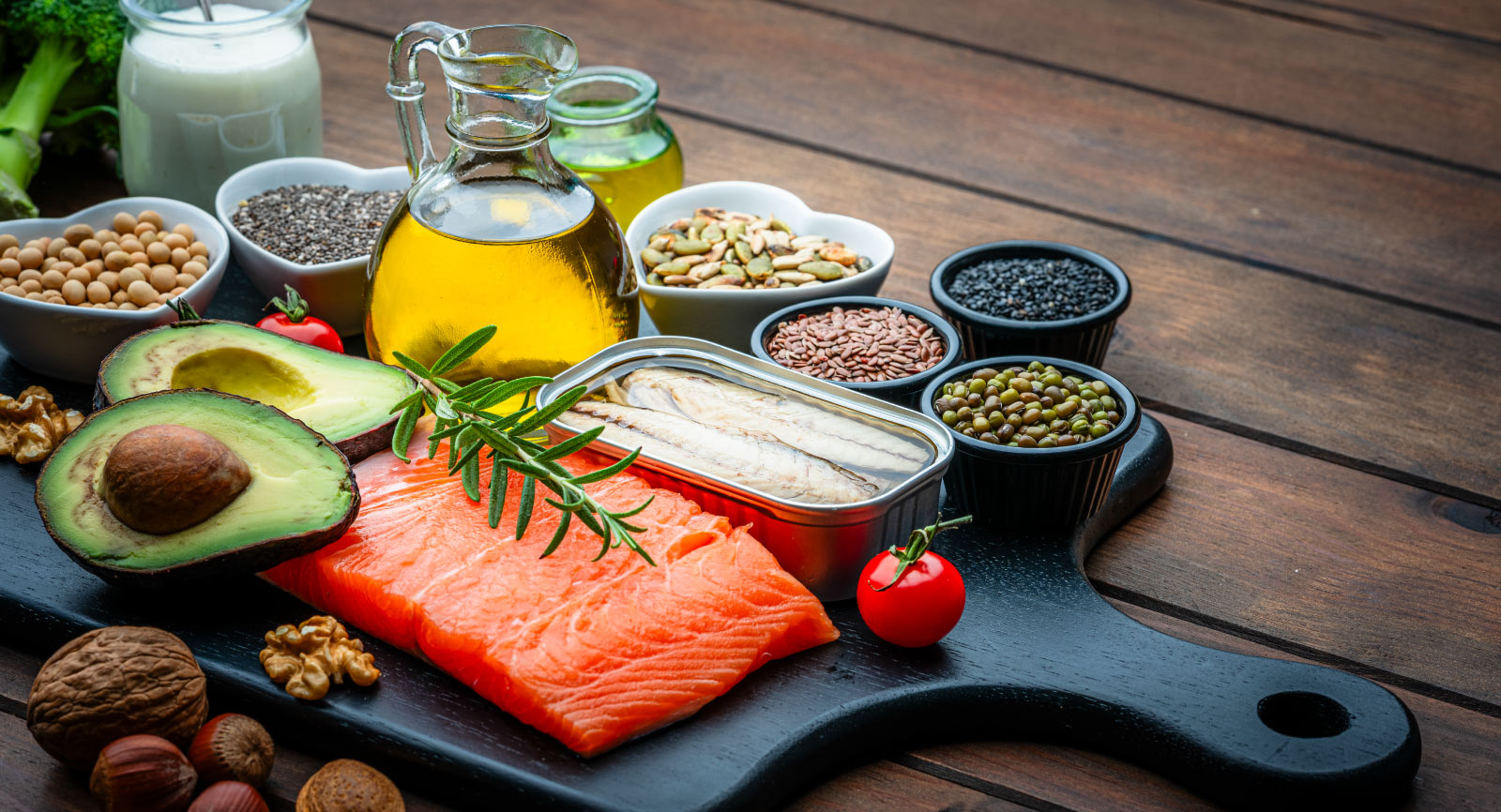
Unsaturated fats are often known to be heart-healthy because they are associated with lowering low-density lipoprotein (LDL) cholesterol (“bad” cholesterol) and increasing high-density lipoprotein (HDL) (“good” cholesterol). Monounsaturated fat, polyunsaturated fat, omega-3 and omega-6 fatty acids all fall under this unsaturated fat umbrella. These types of fats should make up most of your daily dietary fat intake.
Food Sources of Unsaturated Fats
Plant oils:
- Olive
- Canola
- Avocado
- Flax/Linseed
- Soy
Nuts:
- Walnuts
- Almonds
- Pistachios
- Pecans
Seeds:
- Chia
- Hemp
- Pumpkin
- Sunflower
- Flax
Other plant foods:
- Soybeans
- Tofu
Fatty fish and seafood with richer sources of omega-3:
- Salmon
- Herring
- Sardines
- Mackerel
- Albacore tuna
- SardinesTrout
- Shellfish
Saturated fats (“non-heart-healthy” fat)
Saturated fats are considered less heart-healthy because high intakes are associated with increasing LDL cholesterol and decreasing HDL cholesterol. Eating excess saturated fat increases your risk of heart disease, stroke and diabetes. American Heart Association (AHA) recommends limiting saturated fat to <6% of total daily calories. On a 2,000-calorie eating pattern, that’s about 13 grams of saturated fat per day. The Dietary Guidelines for Americans recommend limiting saturated fat to <10% of total daily calories. Any step toward reducing saturated fat is a move in the right direction.
Food Sources of Saturated Fats
Full-fat dairy:
- Whole milk
- Full-fat cheese
- Full-fat yogurt
- Ice cream
- Butter
- Ghee
Red meats:
- Beef
- Pork
- Lamb
Higher-fat ground meats (90/10; 85/15, 80/20):
- Beef tallow
- Poultry skin
Processed meats:
- Bacon
- Sausage
- Hot dogs
- Many deli meats
Certain oils (tropical):
- Coconut oil
- Calm oil
- Palm kernel oil
- Products made with these oils
Common higher-saturated-fat meals/snacks:
- Pizza
- Burgers
- Grilled cheese
- Tacos/burritos
- Fried foods
- Many baked goods
- Canned coconut milk
Swaps for Saturated Fats
- Full-fat dairy → low-fat or nonfat dairy (cheese, yogurt, milk)
- High fat cuts of red meat → lean proteins (look for “loin,” “round” or >93% lean ground meats)
- Butter/coconut oil/ghee → liquid plant oils (olive, avocado, canola)
Trans fats (avoid when possible)
There are two types of trans fats: naturally occurring and industrially produced. Naturally occurring trans fats are found in small amounts in some animal products (some dairy and red meat) and their health impact at typical intakes is not entirely understood. Industrially produced trans fats (made through hydrogenation which makes liquid oils solid) are strongly associated with higher LDL, lower HDL and increased risk of cardiovascular disease and type 2 diabetes.
Food Sources of Trans Fats
- Some packaged baked goods such as pastries, cakes, cookies and pies
- Stick-margarine, shortening, fried/battered foods, some snack foods and certain shelf-stable foods
- Any food made with “partially hydrogenated oil” “shortening” or “hydrogenated vegetable oil,” in the ingredient list contains trans fat. The food label by law lists 0 g Trans Fat if it contains trace amounts less than 0.5 g per serving. If you eat multiple servings it, will add up.
Trend Check: “Natural,” “Organic” and “Grass-fed” Animal Fats – Do They Matter?
Marketing terms such as “natural,” “organic” and “grass-fed” can make figuring out which fats are “better” even more confusing. These terms do not automatically make an animal fat heart-healthy. Evidence-based research shows what matters most is the type of fat, especially how much saturated fat these foods contain.
One tablespoon of many animal fats provides about half (or more) of the AHA’s suggested daily saturated fat limit or <6% for a 2,000-calorie diet (~13 g/day) which can add up quickly.
- Beef tallow: ~6.5 g saturated fat per 1 tablespoon
- Butter: ~7 g saturated fat per 1 tablespoon
- Ghee: ~10 g saturated fat per 1 tablespoon
Key Takeaways
Try to choose unsaturated fats such as liquid plant oils, nuts, seeds and fatty fish as your primary sources of dietary fat.
Aim to keep saturated fat to < 6% of total daily calories by limiting foods such as butter, ghee, beef tallow, high-fat dairy and fatty/processed meats. Try to avoid trans fats as much as possible. Read the Nutrition Facts panel on labels and the ingredient list and don’t be misled by terms such as “natural,” “clean” or “grass-fed.”
The practical “swap” approach of replacing many saturated and trans fats with unsaturated fats is one of the most reliable nutrition strategies for improving cholesterol levels and supporting heart health.
To learn more about heart-healthy eating, read this article Heart-Healthy Food Swaps or schedule a nutrition consultation, at cooperclinicnutrition.com or by calling 972.560.2655.
Article provided by Cooper Clinic Nutrition.